Chapter 11
Read Views, Snapshots, And Clones
Read Views
- Live volume
- Snapshot root
- Clone delta
- Materialized clone
A read view is an explicit identity for resolving logical ranges. Live volumes, snapshots, clones, and materialized clones resolve through different roots. VolumeRevision can be useful in logs, but it is not the identity for snapshot or clone reads.
Snapshot and clone reads use explicit read-view roots. Parent overwrites, discard, expansion, or later live metadata commits do not change an already captured snapshot root.
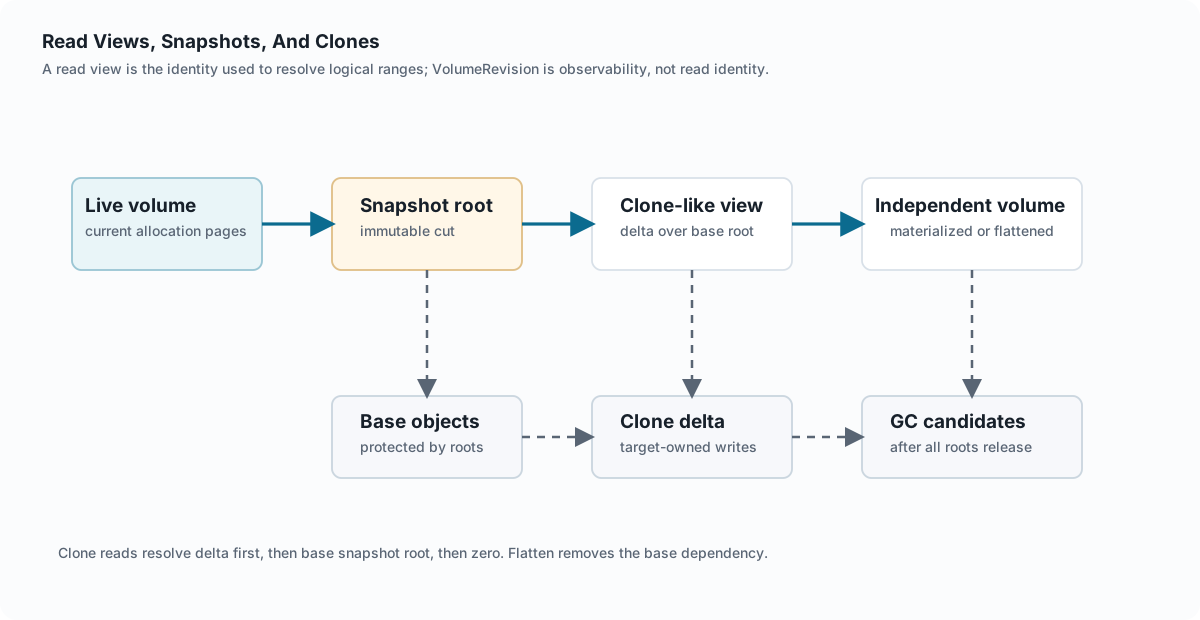
Read-View Types
| Read View | Identity | Resolution Behavior |
|---|---|---|
| Live volume | volume_id plus current committed metadata. |
Resolve from live allocation pages. |
| Snapshot | snapshot_id and snapshot_root_id. |
Resolve from immutable captured snapshot root pages. |
| Clone | clone_id, base root, and clone delta. |
Resolve clone delta first, then base snapshot root, then zero. |
| Materialized clone | Independent volume-like identity. | Resolve from independent allocation pages. |
Snapshot Cut Point
Snapshot create captures committed allocation metadata at the cut point. Writes committed before the cut are visible in the snapshot; writes committed after the cut are not. The returned snapshot_root_id is the authority for future snapshot reads.
Clone Writes
Clone writes allocate new Physical Objects and publish clone delta metadata. They do not mutate the source snapshot root and do not mutate the source volume. This is copy-on-write at the logical mapping layer and append-only at the physical payload layer.
Materialization
Materialization produces an independent volume-like mapping. The source snapshot reference is released only after the independent mapping is durable and readable without depending on the clone base read-view.
Clone, Materialize, And Flatten Lifecycle
| Stage | Metadata Shape | Read Behavior | Release Boundary |
|---|---|---|---|
| Snapshot capture | Persist snapshot_id and immutable snapshot_root_id. |
Snapshot reads resolve only through the captured root. | The source volume can keep writing without changing the snapshot root. |
| Clone-like view | Create clone_id, base snapshot ref, and empty or sparse clone delta pages. |
Reads check clone delta first, then base snapshot root, then zero. | The base snapshot stays protected while the clone can fall back to it. |
| Clone writes | Publish clone-owned AllocationEntries for changed ranges. | Changed ranges read clone objects; unchanged ranges read the base root. | Old source and snapshot objects are not overwritten in place. |
| Materialize | Copy or re-reference the resolved view into independent volume allocation pages. | The target can be read without consulting the clone base after commit. | Base refs are released only after independent mapping is durable and verified. |
| Flatten | Convert remaining fallback ranges into target-owned mappings and drop base dependency. | Reads become volume-local even for ranges that originally fell back to the snapshot. | GC may reclaim former base-only objects only after all other roots are gone. |