Chapter 8
Replicated Backend
Replicated Path
- Replica set
- Replica physical chunks
- Quorum semantics
- Metadata visibility
The replicated backend stores a Physical Object as replicated payload chunks across selected sbs-data targets. The replicated descriptor explains how to read, write, and delete that object. It is a backend-specific descriptor under the same logical storage substrate used by snapshots, clones, discard, and GC.
Replica physical chunk references are physical backend details. They do not replace AllocationEntry and PhysicalObjectRef as the logical storage truth.
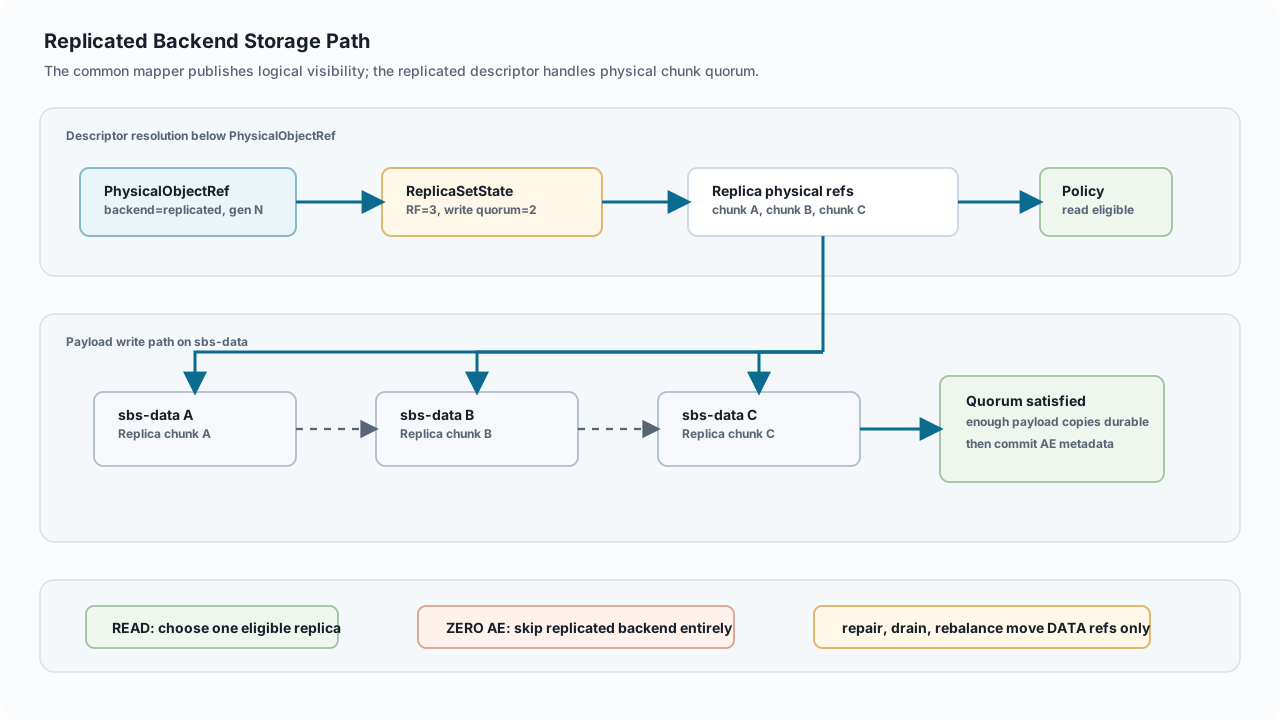
What Is Different In Replicated Mode
Replicated mode does not change logical range resolution. It changes the backend descriptor and payload execution below PhysicalObjectRef. The backend stores equivalent payload chunks on multiple sbs-data targets and uses ReplicaSetState to decide read eligibility, write quorum, repair, rebalance, and drain behavior.
| Concern | Common Logical Rule | Replicated Backend Rule |
|---|---|---|
| Zero read | AllocationEntry kind=zero returns zeroes without payload access. |
No replica is contacted because no PhysicalObjectRef is produced. |
| Data read | The read view resolves an AllocationEntry to a replicated PhysicalObjectRef. | The backend chooses an eligible replica target and reads the named physical chunk. |
| Write | New data becomes visible only after AllocationEntry metadata commit. | Payload is written to enough replicas for quorum before the metadata commit publishes the new ref. |
| Maintenance | Reachability and read-view roots decide which objects must stay protected. | Repair/rebalance/drain copy or replace replica chunks, then publish replacement descriptor state. |
Records And Store Objects
The replicated backend is concrete, but it is still layered. TiKV records decide which object is visible and where replicas should live. Local Pebble stores on sbs-data nodes hold the actual payload chunks and local execution metadata.
| Layer | Representative Record / Key | Purpose |
|---|---|---|
| Volume policy | VolumeSpecRecord, admin/volumes/<id>/spec |
Defines replicated backend, replication factor, geometry, and placement policy. |
| Logical mapping | AllocationPageRecord, volumes/<id>/allocation/pages/<page> |
Publishes AllocationEntries that point to replicated PhysicalObjectRefs or zero state. |
| Object descriptor | PhysicalObjectRecord or compatibility physical_chunk_start |
Names the replicated backend object and descriptor used after logical resolution. |
| Placement and quorum | ReplicaSetState, volumes/<id>/replicasets/<replica_set_id> |
Names replica members, primary preference, read quorum, write quorum, epoch, and failure domains. |
| Local payload | Node-local Pebble chunk/store keys managed by sbs-data |
Holds the actual replicated payload bytes and local store state. It is not global reachability truth. |
Descriptor Contents
| Field Class | Purpose |
|---|---|
| Placement reference | Connects the object to placement/failure-domain planning. |
| Replica set identity | Names the target set used to store replicated chunks. |
| Replica physical chunk refs | Backend-specific physical read/delete identities. |
| Quorum metadata | Documents write/read quorum expectations for the object. |
Write Path Shape
Metadata commit remains the visibility point. If payload reaches replicas but the metadata commit fails, the payload is unreferenced cleanup work rather than visible volume data.
How Replicated Writes Work
| Step | Action | Authority Boundary |
|---|---|---|
| 1. Resolve placement | sbs-service uses volume policy, topology, and ReplicaSetState to choose eligible replica targets. |
Placement is TiKV/SBS authority, not gateway or kernel state. |
| 2. Persist payload | The backend writes payload chunks to selected sbs-data stores and waits for the required write quorum. |
Quorum proves backend durability for that object, not logical visibility by itself. |
| 3. Prepare descriptor | The write prepares a replicated PhysicalObjectRef or compatibility descriptor with chunk identity, count, generation, and checksum where available. | Descriptor fields remain backend-private below PhysicalObjectRef. |
| 4. Commit metadata | sbs-service commits AllocationPageRecords and advances the volume revision in TiKV. |
This metadata commit is the visible read-view boundary. |
| 5. Retire old refs | Old PhysicalObjectRefs become protected or reclaimable only after reachability analysis. | Snapshots, clones, pending operations, and GC roots can keep old chunks alive. |
Read Path Shape
A read first resolves the logical range to AllocationEntries. A zero entry returns zeroes. An allocated entry dispatches the PhysicalObjectRef to the replicated backend reader, which chooses eligible replica targets according to the descriptor and target availability.
Failure And Maintenance States
| State / Operation | Replicated Backend Meaning | Observable Boundary |
|---|---|---|
| Healthy replica set | Enough members are healthy to satisfy write and read quorum while preserving failure-domain policy. | ReplicaSetState, node health, and gateway published target view agree. |
| Degraded read | The backend can read from an alternate eligible replica when a preferred target is unavailable. | Path choice is backend availability, not a change to AllocationEntry truth. |
| Primary failover | ReplicaSetState epoch and primary preference change after fencing stale writers. | Readers should see a new placement epoch, not a new logical object solely because the primary changed. |
| Repair / rebalance / drain | Maintenance copies or moves backend chunks, validates topology, and publishes placement transition state. | Logical visibility remains through existing PhysicalObjectRefs until metadata publishes a replacement descriptor. |